
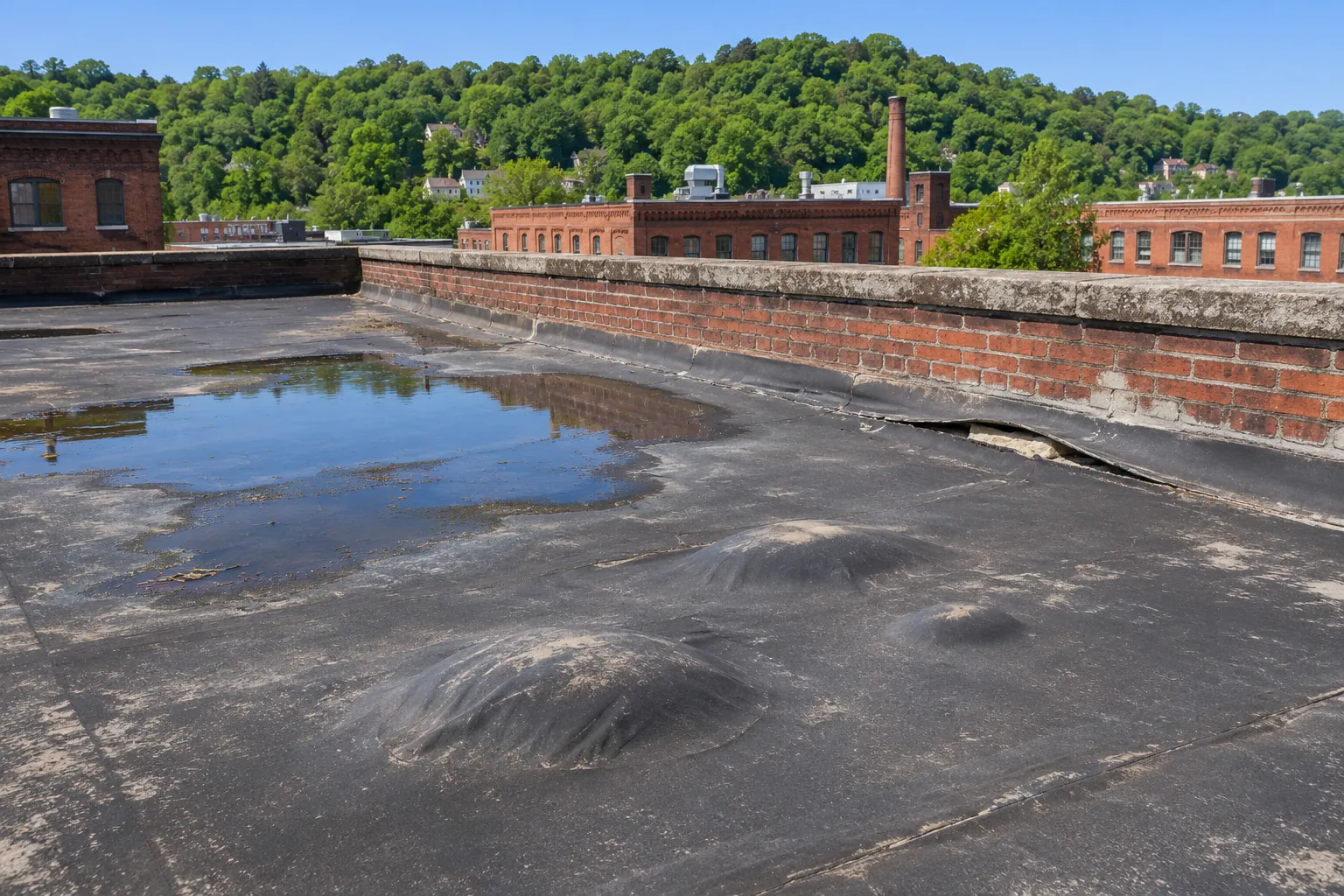
Flat Roof Repair
Membrane around interior drains is resealed in the clamping ring, and seams near ponding areas are checked and patched.
Flat roof repair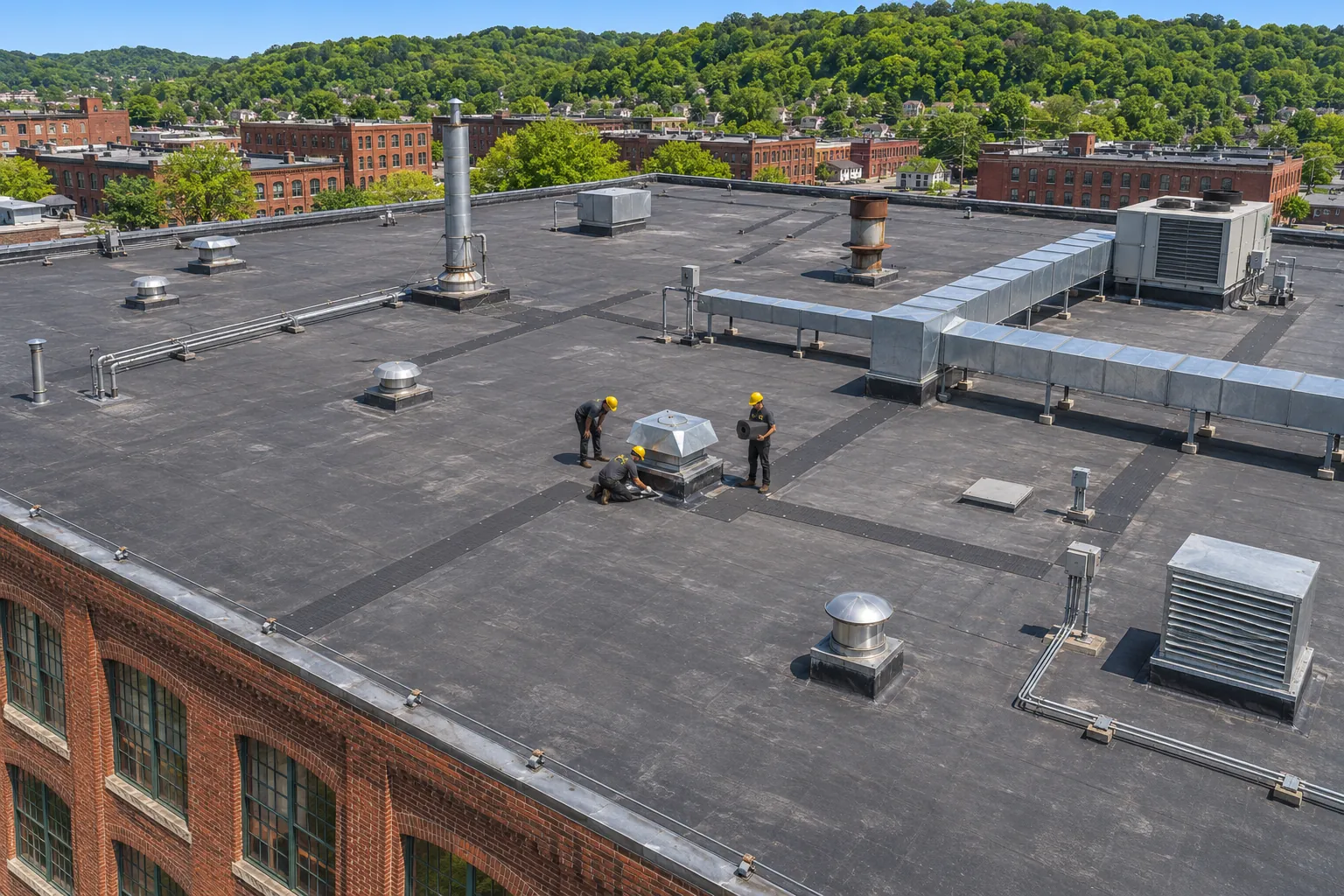
Wilder, KY
As a Wilder commercial roof repair contractor, we test and repair roof drains, clamping rings, and overflow scuppers on business buildings near the Licking River.
High water on the Licking River can back up storm lines serving Wilder buildings near the river. When it does, a Wilder commercial roof repair contractor often finds interior drains that stopped draining.
Owners see ponding on the roof or water at drain bodies inside after the river rises. Wilder commercial repair permits are reviewed by Campbell County’s building inspectors; the state sheet keeps a separate county contact for single-family dwellings.
Backed-up storm lines show up on the roof and inside. These pairs explain the signs.
Water sits around drains on the roof after the river rises.
River high water fills the storm line, so roof drains have nowhere to send water.
Leaks appear around the drain body or leader inside the building.
Standing water pushes on the drain clamping ring until membrane pulls loose.
Rain spills from an overflow scupper in a narrow sheet during storms.
Debris partly blocks the scupper, so it overflows in a thin sheet down the wall.
Getting drains working again after high water protects the membrane, the drain bodies, and the rooms below.
Cleared leaders and strainers let the roof drain once the storm line is clear.
Tightened or replaced bolts reseat the membrane where standing water pulled it.
Resealed drain connections stop water from showing up around leaders inside.
Ending ponding over interior drains protects ceilings and equipment underneath.
A flow test after the river drops becomes routine whenever water comes up.
Clear overflow scuppers give the roof a way to shed water if the line backs up again.
Each service covers how river high water affects Wilder roofs.
Membrane around interior drains is resealed in the clamping ring, and seams near ponding areas are checked and patched.
Flat roof repair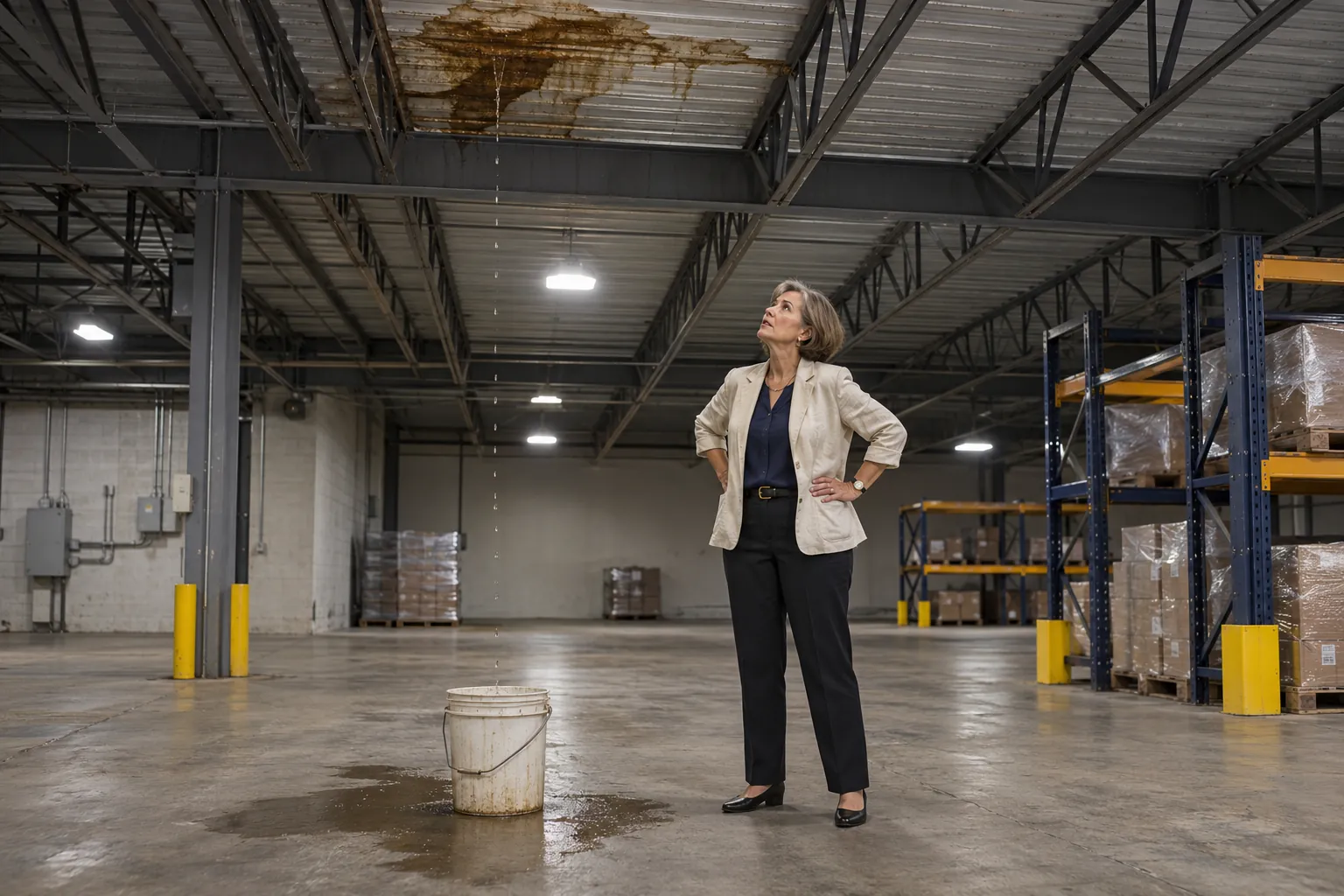
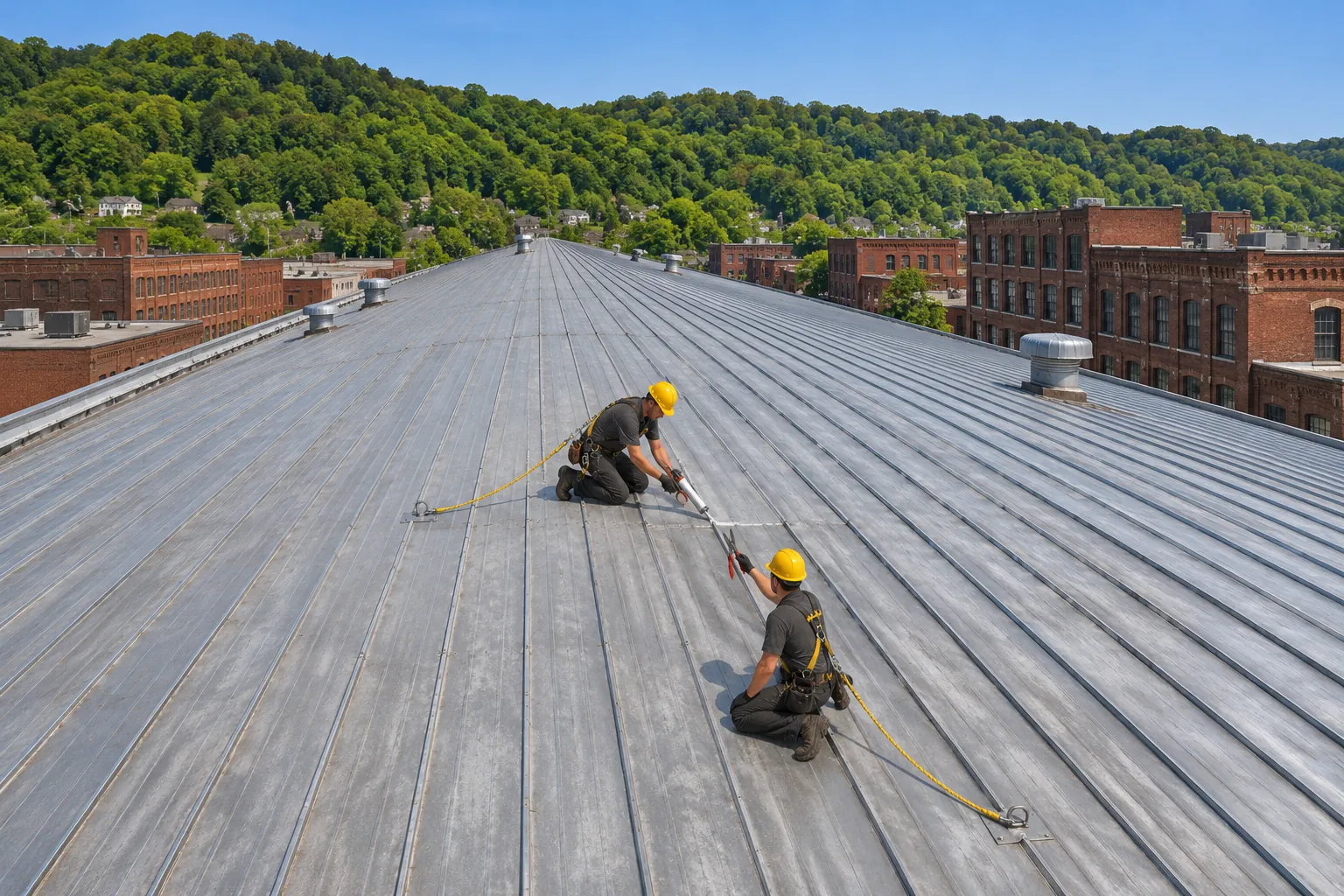
Gutters and downspouts on metal buildings are cleared of silt, and outlets at grade are opened up.
Metal roof repair
Water at drain bodies inside gets traced to the clamping ring, leader joint, or a backed-up line.
Leak repair
Large roofs with many interior drains get every drain flow-tested and logged after the river drops.
Industrial roof repairCall with the number of drains and where water stands. Once the river drops, each one gets flow-tested.
Four decisions take a roof from backed-up drains to tested flow.
Drains, strainers, clamping rings, and overflow scuppers are checked, and ponding areas are measured.
Flow testing waits until the river drops, since a full storm line makes every drain look blocked.
Silt comes out of strainers and leaders, and membrane is reseated in clamping rings with new bolts.
A hose runs into every drain to confirm the leader flows, and results are logged by drain.
Is your Wilder building close to the river? We repair commercial roofs in every town on this list; for anywhere else, call us or send us a message.
Drain questions owners near the Licking River ask.
Most Asked
It can back up the storm lines serving buildings near the river, and interior roof drains tied into those lines then stop draining. Owners see ponding on the roof or water at drain bodies inside. After the river drops, flow-test each drain with a hose, clear strainers and leaders of silt, check clamping rings, and inspect overflow scuppers.
While the storm line is full, every drain tied into it backs up, so a test shows nothing useful. Once the river falls, a flow test shows which drains have real blockages from silt or debris, and those get cleared before the next storm.
Standing water strains the drain clamping ring and keeps seams near the drain wet. Over time that loosens membrane at the ring and opens nearby laps. Resealing the ring and checking those laps follows any long ponding event on the roof.
It gives water a way off the roof when the main drains fall behind. Keeping it clear means a backed-up line leads to water off the edge instead of deep ponding, which protects the membrane and the drains while the river is high.
Campbell County’s building inspectors review commercial repair permits. Simple clearing and resealing rarely need one; replacing drain bodies or changing how the roof drains are the scopes to ask the county about first.
If water shows up only when the river is high, the storm line is the likely cause. If it shows up in every rain, the clamping ring, the leader joint, or the membrane around the drain is the suspect, and a water test on the roof confirms which.
Downspout outlets at grade, base flashing on lower walls, and any roof areas close to the ground. Silt left at outlets backs water into downspouts, and standing water at the walls loosens trim. Each item gets photographed with the date, so the next high-water check has a baseline.
Tell us how many drains back up and where water stands, and we will set up a free drain inspection and estimate.