
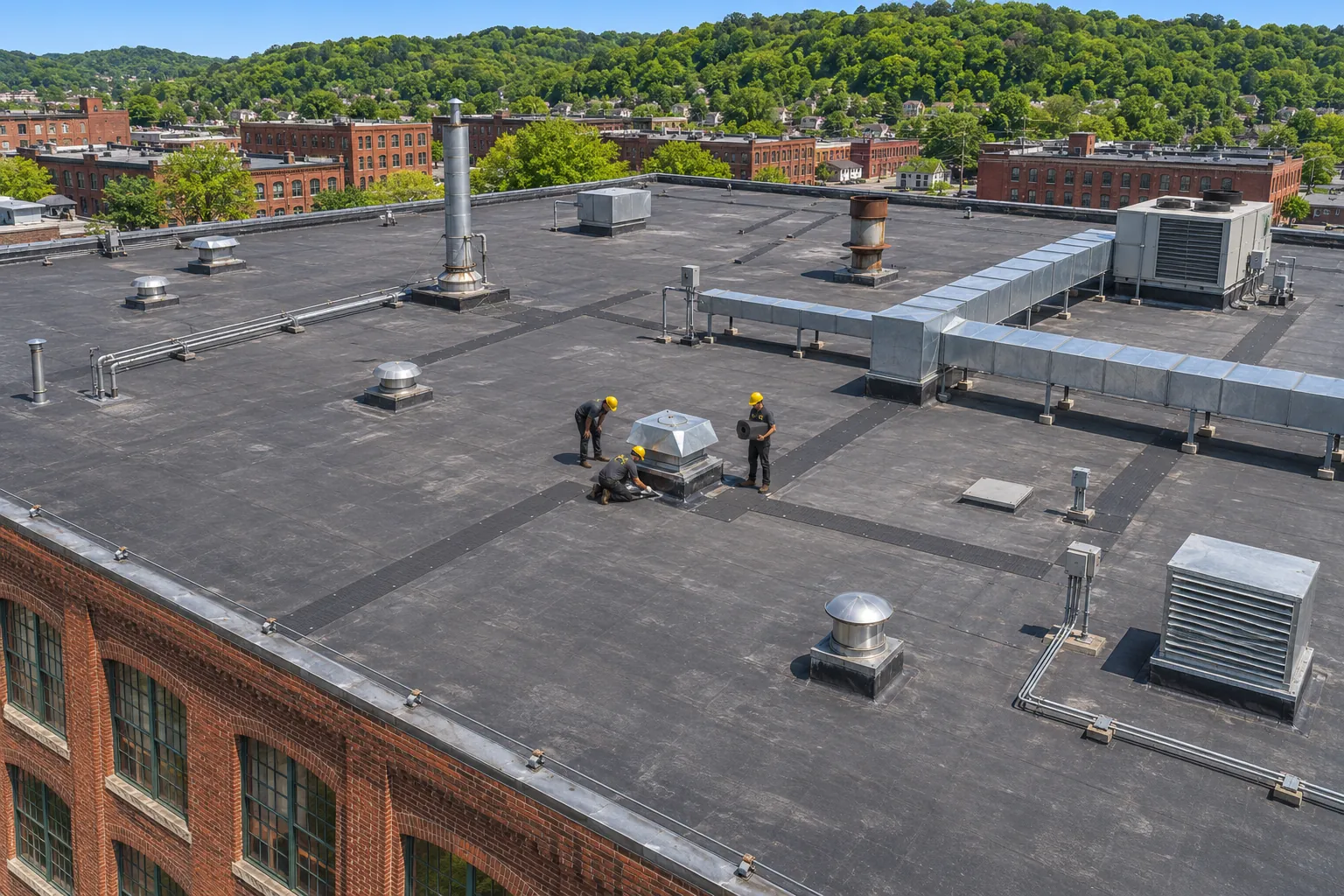
Curb And Pitch Pan Repairs
Split curb corners get corner patches, pulled counterflashing is refastened or replaced, and pitch pans are refilled or swapped for pre-molded boots.
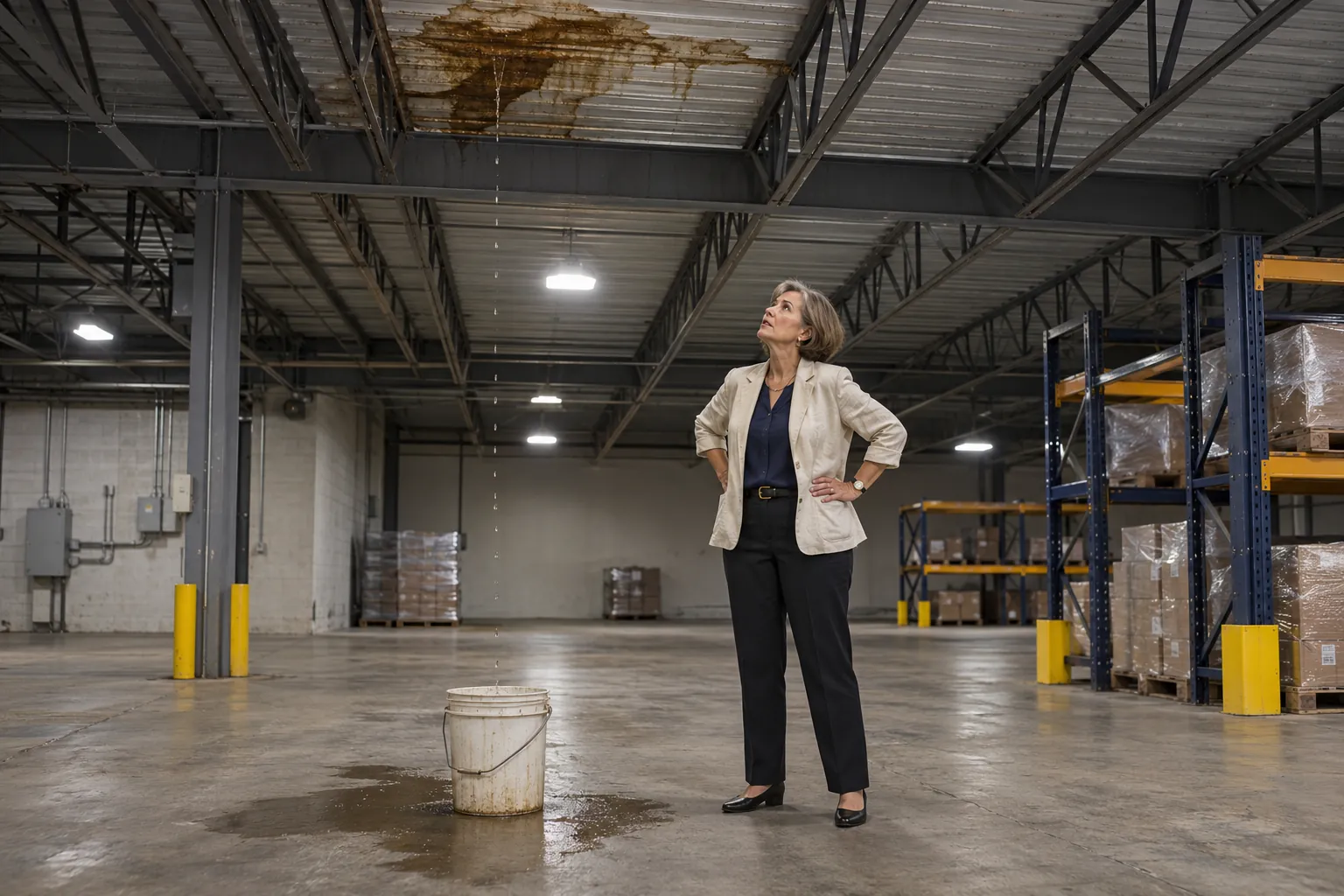
Commercial Roof Leak Repair
As a Covington commercial roof leak repair contractor, we trace water from the interior drip back to the seam, curb, drain, or flashing letting it in, then fix that detail.
A Covington commercial roof leak repair contractor first separates leaks with one source from roofs leaking everywhere. The table shows how each pattern plays out.
| Leak Pattern | Likely Source | What Fixes It |
|---|---|---|
| Wind-driven rain from one side | Parapet caps, wall flashing, rake trim | Sealed cap joints, refastened cleats, new counterflashing |
| Heavy downpours only | Overflowing drains, gutters, scuppers | Cleared strainers, reset clamping rings, larger outlets |
| Snowmelt and freeze | Ice backing up at eaves and end laps | Resealed laps, eave repairs, gutter outlet work |
| Long, steady rain | Slow seepage through seams or wet insulation | Seam repair plus a moisture survey of the area |
| Every storm, many places | Seams or fasteners failing roof-wide | Restoration or replacement planning |
Where water shows up inside rarely matches where it gets in. These pairs show the mismatches we trace most.
Water falls from a light fixture or tile far from any wall or unit.
On steel decks, water runs inside the flutes for many feet before it finds a gap to drop through.
Puddles form under the unit even on dry days with no rain in the forecast.
Some HVAC drips come from the unit itself, through a clogged pan or an open cabinet seam.
Rings form on the drywall around a skylight opening after heavy rain.
Split curb corners, cracked frame sealant, or a brittle translucent panel let water into the well.
Once the source is confirmed, the repair goes on that detail, with the fix matched to the roof system.
Split curb corners get corner patches, pulled counterflashing is refastened or replaced, and pitch pans are refilled or swapped for pre-molded boots.

Skylight curbs are reflashed and frames resealed; parapet cap joints are sealed or replaced and loose cleats refastened.
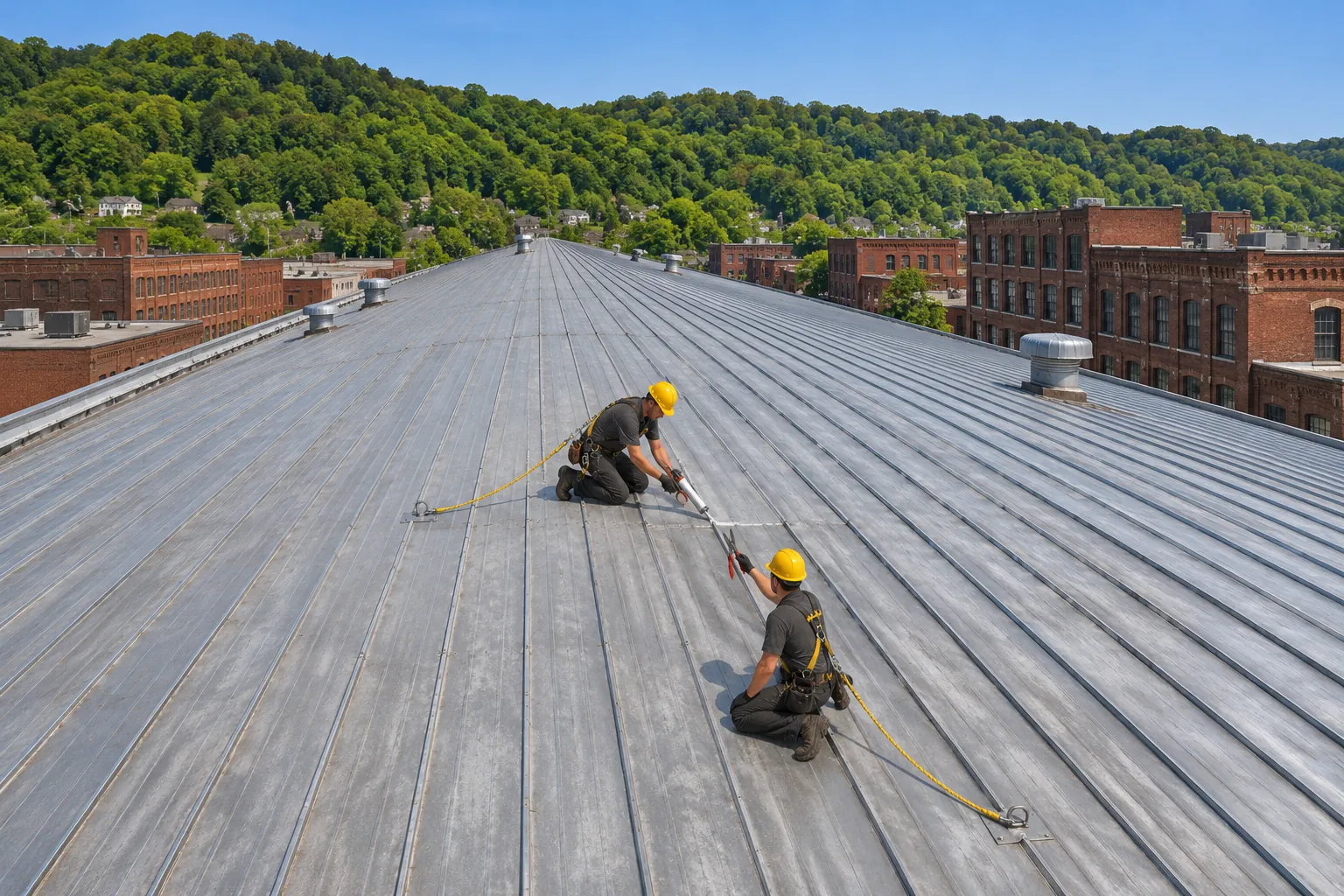
Clamping rings are reset with new bolts, strainers replaced, and overflow scuppers cleared or enlarged so water leaves the roof.
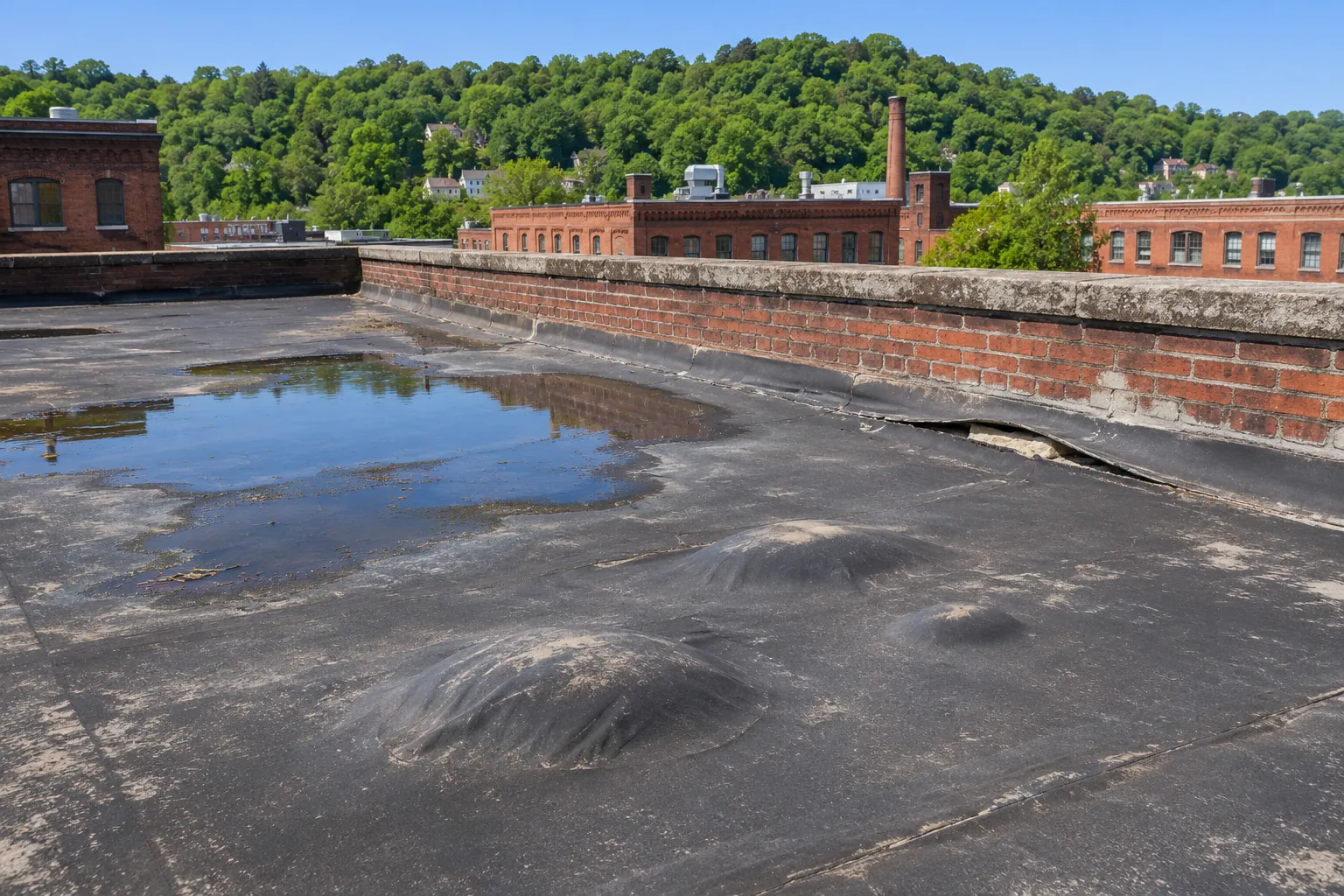
Open membrane seams are re-welded or taped, and metal laps resealed, once testing shows the water enters there.
Fixing the actual entry point ends repeat ceiling repairs and keeps water from spreading into more of the roof.
Repairing the curb, seam, or drain at fault stops the water instead of sealing spots it never touched.
Closing the source early limits how far water spreads through the board around the opening.
With the roof sealed above, new ceiling tiles and drywall stay clean through the next storm.
Dry roofs over electrical rooms, servers, and stock rooms mean fewer emergency moves during rain.
Dated notes on wind, rainfall, and drip location shorten the next search if water ever returns.
Testing one detail at a time keeps money off patches that only guess at the source.
Note the wind direction and rainfall each time it drips. Then call, and that pattern tells us which side of the roof to test first.
Leak work follows the water’s path in reverse, from the drip inside to the detail on the roof.
Starting above the interior drip, we work uphill and check every seam, flashing, curb, and opening along the water’s likely path.
Infrared after sunset shows wet insulation; water testing one detail at a time, low to high, shows which opening leaks.
A small core cut confirms what the scan suggests before any section of roof is opened for repair.
The curb, seam, drain, or flashing that failed gets repaired with materials matched to that roof system.
Each repaired detail is water tested again, and the date, weather, and fix go into your leak log.
Once a leak is traced, the fix often belongs to one of these roof-specific services.
A source traced to a TPO, PVC, or EPDM seam or puncture gets repaired with matching membrane.
Screws, end laps, or rusted gutters found leaking on a panel roof get fastener and lap repairs.
Water over production lines or electrical rooms in plants gets repaired first and scheduled around operations.
Answers about finding the source before anything gets patched.
Most Asked
Tracing starts at the interior drip, then moves to the roof above and uphill from it, checking each seam, flashing, and opening along the water’s path. On steel decks water runs along the flutes for many feet before dripping. Infrared scans after sunset, moisture meters, water tests, and core cuts narrow it down.
Most leaks start at transitions and openings instead of the open field. TPO and PVC leak at unwelded lap edges, curb corners, and pipe boots; EPDM at lifting seam tape and shrinking edges; built-up roofs at blisters and pitch pans; R-panel metal at screw washers and end laps. Drains leak on every type once clamping rings loosen.
Because the leaking detail only gets wet under certain conditions. Wind-driven rain points to parapet caps, wall flashing, or rake trim; heavy downpours to overflowing drains; snowmelt to ice at eaves and end laps; steady rain to slow seepage through seams. Storm reports from the National Weather Service office in Wilmington, Ohio, help match leak dates to storms.
Curb corners and bases are reflashed, counterflashing under the unit’s cap is resealed, and pitch pans are refilled or replaced with pre-molded boots. The unit itself gets checked too, since a clogged condensate pan or open cabinet seam drips like a roof leak. Pitch pan filler shrinks with age, so refilling it belongs on every maintenance visit.
By resealing or replacing the flashing around the opening or along the wall, and fixing the cap or curb that sheds water onto it. Brittle translucent panels on metal roofs get replaced with new closures. Water entering a parapet cap often travels inside the wall, so the wall face and cap are tested separately.
Tell us where water shows up inside and when it started, and we will set up a free leak inspection and estimate.