
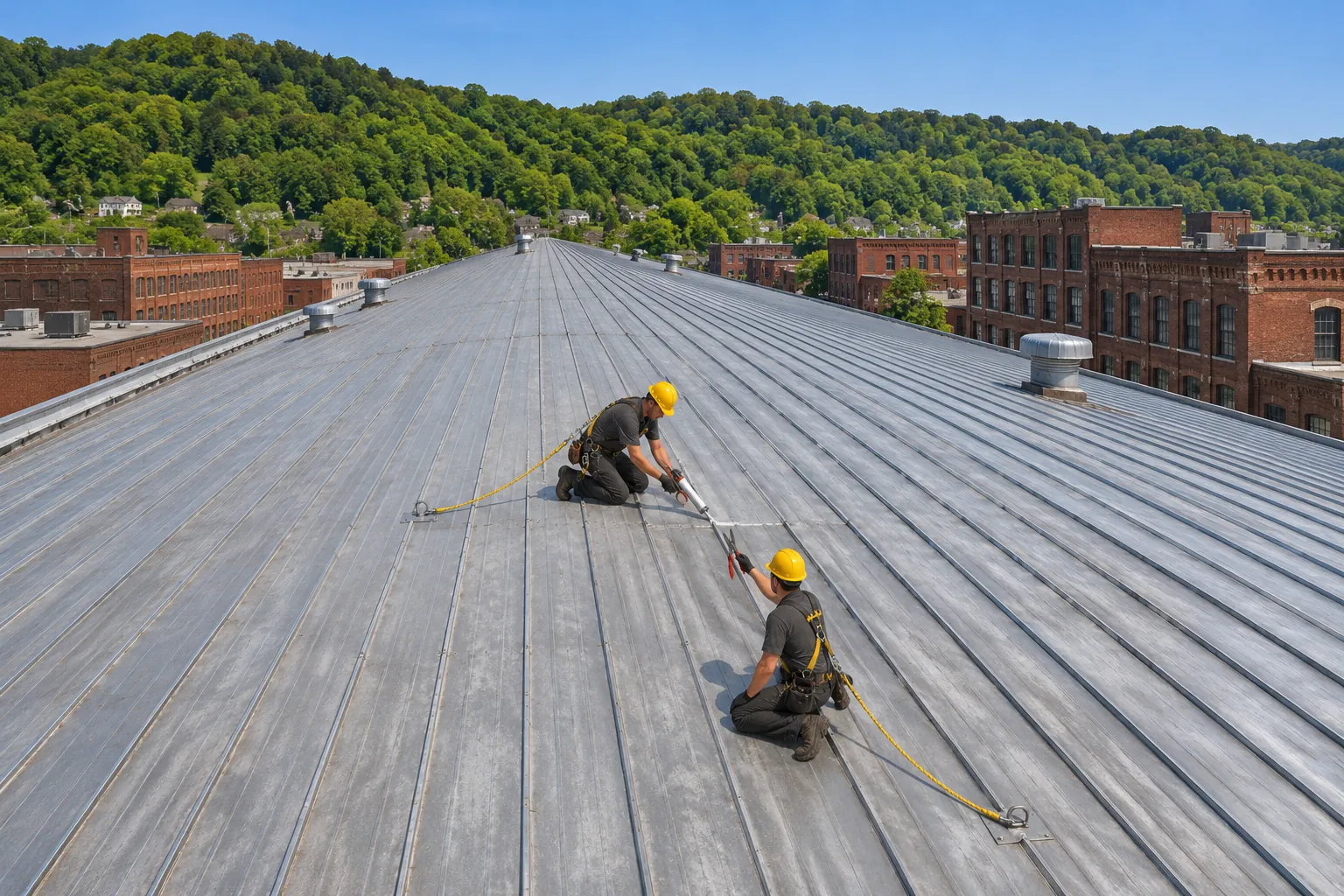
Flat Roof Repair
Drains and scuppers are cleared, moss cleaned off, and laps underneath inspected and patched.
Flat roof repair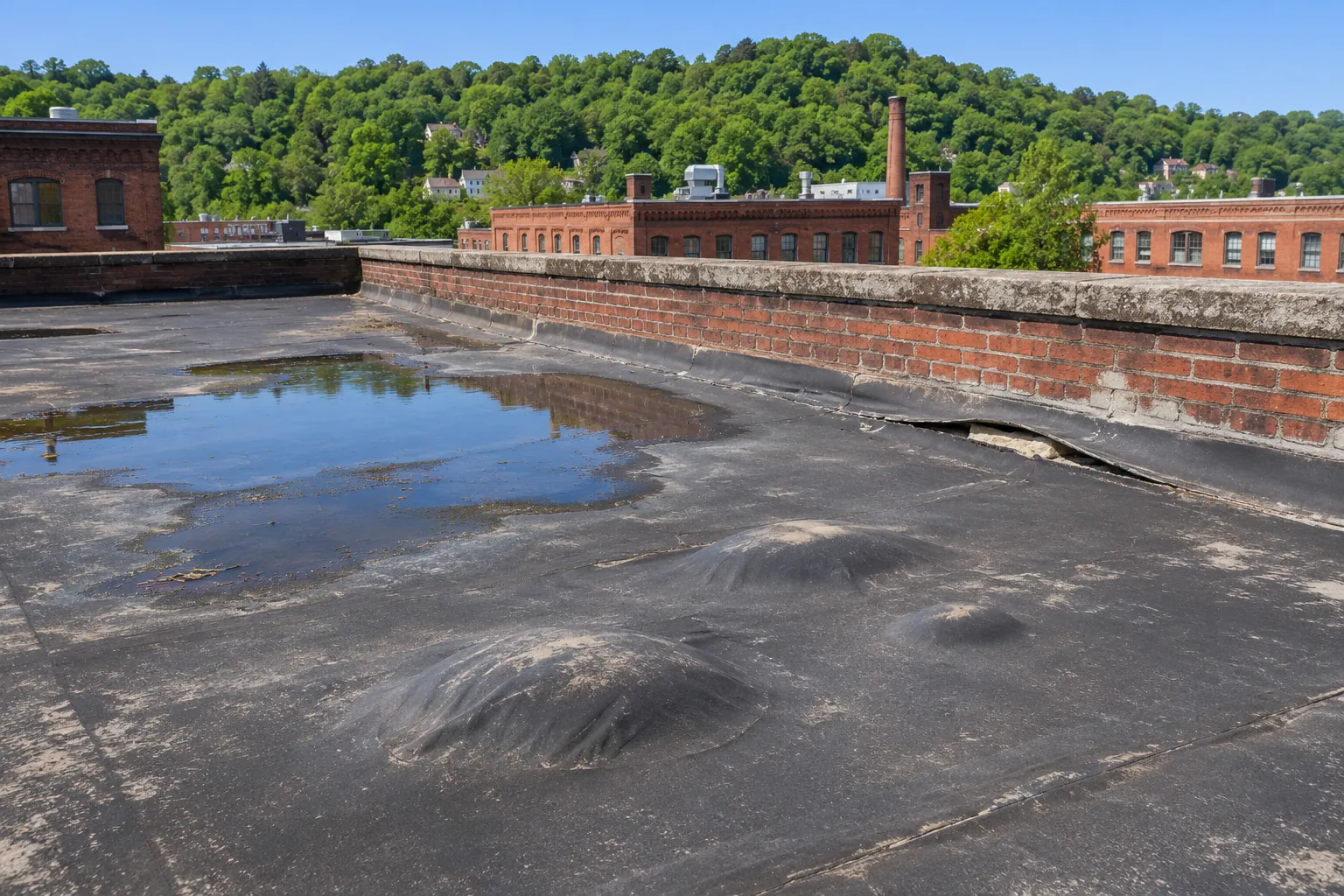
Park Hills, KY
As a Park Hills commercial roof repair contractor, we clear leaf-choked drains, repair branch-worn membrane and panels, and fix the leaks trees cause on business buildings.
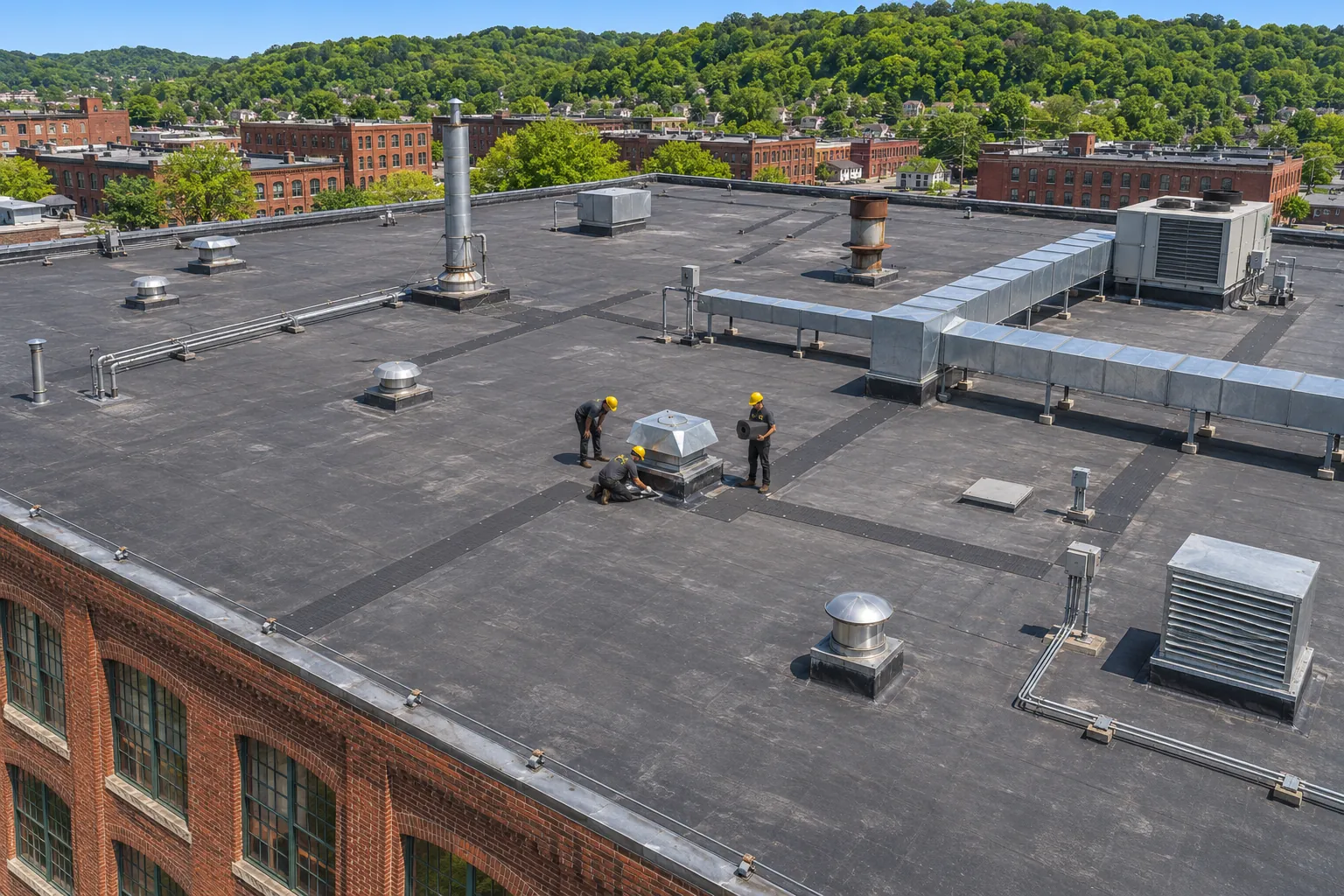
Trees around Park Hills buildings cause leaks in several ways, and a Park Hills commercial roof repair contractor sees their effects on almost every roof: clogged drains, shaded moss, and worn spots under branches.
Wet leaf piles also start rust on metal at gutter seams and end laps. Larger repairs needing a permit are filed with PDS of Kenton County, as listed on the state’s Kenton County sheet.
Tree damage builds slowly. These pairs show what it looks like from inside and on the roof.
Water stands on the roof each fall after the leaves come down.
Leaf mats seal the drain strainer, and water backs up across the field.
A leak appears in the room under the most shaded part of the roof.
Moss keeps the membrane wet and hides laps that have started to open.
Branches can be heard dragging on the roof during storms.
Constant rubbing wears through membrane, coatings, or panel finish.
Dealing with what the trees do to the roof stops slow damage before it turns into leaks.
Cleared strainers and leaders let water leave the roof instead of ponding against seams.
Trimmed branches and patched membrane end the abrasion at the source.
Repaired laps under the shaded area stop the drip in that corner room.
Clear gutters keep overflow from running behind the trim.
A fall visit after leaf drop catches clogged drains before winter.
Checking gutter seams and end laps under leaf piles finds rust while it is still on the surface.
Each service covers what trees do to Park Hills roofs.
Drains and scuppers are cleared, moss cleaned off, and laps underneath inspected and patched.
Flat roof repair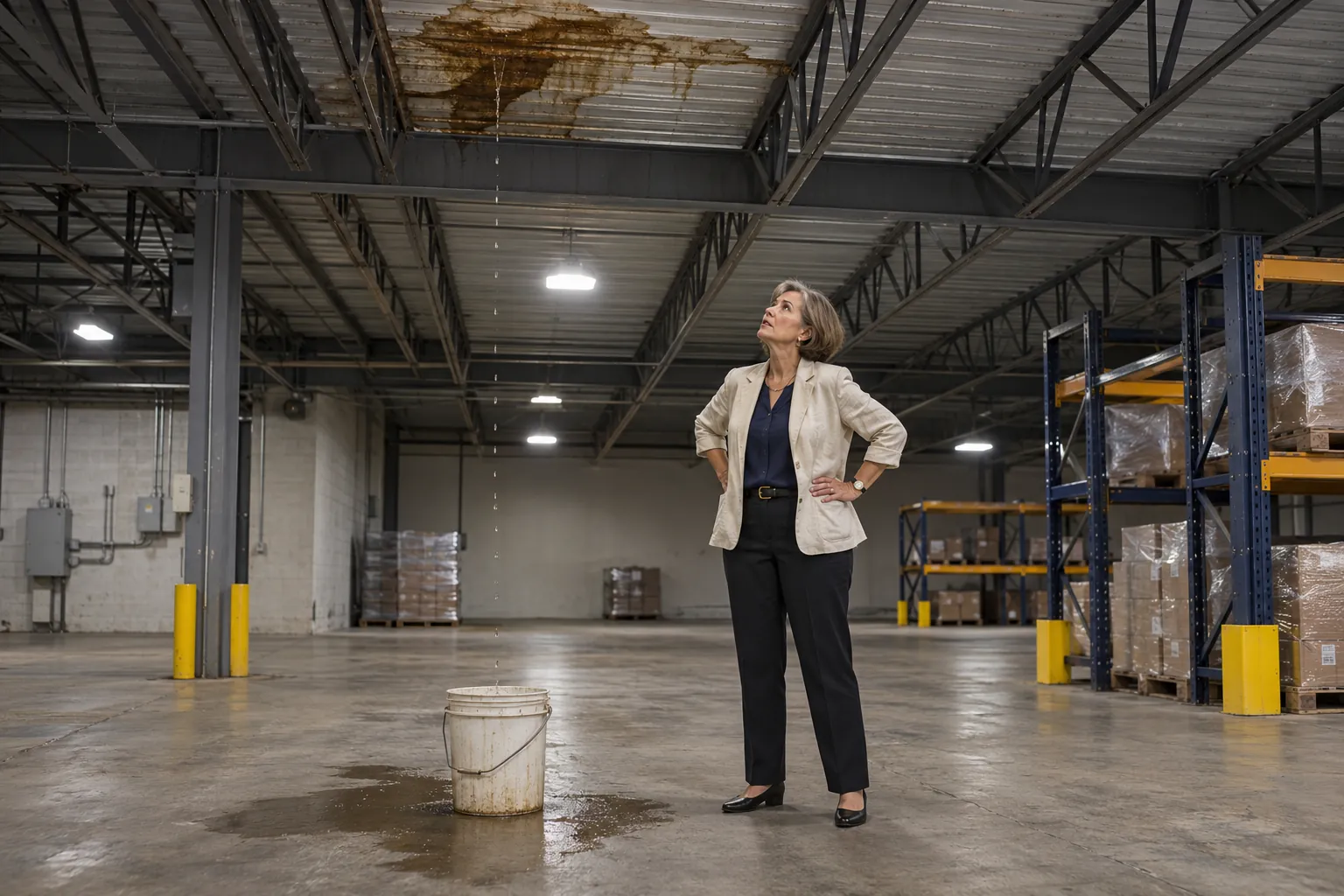
Gutter seams and end laps under leaf piles are cleaned, primed where rusty, and resealed.
Metal roof repair
Leaks under shaded areas get traced to the lap or curb flashing that moss and debris have worn.
Leak repair
Larger roofs near tree lines get drain and gutter clearing scheduled with seasonal inspections.
Industrial roof repairA clogged drain is the usual cause. Call and tell us how many drains the roof has and where water stands.
Four decisions deal with the tree, the drain, and the roof together.
Drains, gutters, shaded areas, and spots under overhanging branches are checked and photographed.
Leaves, seed pods, and debris come off drains, curbs, and gutters so the details underneath can be seen.
Membrane or panels worn by branches get matching patches once the branch is trimmed back.
A fall visit after leaf drop goes on the calendar to keep drains open through winter.
Is your Park Hills building surrounded by trees? We repair commercial roofs in every town shown; for a building outside this area, call us or send us a message.
Tree-related roof questions from Park Hills owners.
Most Asked
By dropping leaves that clog drains and gutters, shading roofs so moss and algae hold moisture, and rubbing branches that wear through membrane or coatings. Wet leaf piles also start rust at gutter seams and end laps. Fixes include clearing strainers, cleaning moss and patching the laps under it, trimming branches, and checking curb flashing.
At least once after the leaves fall and once in spring, plus after major storms. Roofs under heavy cover need more frequent checks. Keeping strainers clear prevents most of the ponding these roofs see, and it is far simpler than repairing seams that sat under water.
A tree service handles the trimming, and the roof repair follows. Branches touching or hanging close over the roof are the priority, since wind drives them into the membrane or panels. Trimming first means the patch is not worn through again by the same branch.
Moss holds water against the roof surface and hides laps and seams. On membrane it keeps seams wet; on metal it speeds rust at laps. Removing it and inspecting underneath is part of the repair, and any open lap found under it is patched before the crew leaves.
They collect at curbs, drains, and gutter outlets, where they block water and hold moisture against flashing. Clearing them during inspections keeps curb flashing visible and dry, and lets cracks in that flashing be spotted before they leak.
Wet leaves sit on gutter seams and end laps for weeks, keeping the steel damp long after the rest of the roof dries. The protective finish breaks down there first. Cleaning the area, priming firm rusty steel, and resealing the lap stops it early.
Branches clear of the roof still drop leaves, seed pods, and twigs into drains and gutters, and in a storm they can break and fall onto the membrane. Trimming back the overhang reduces both, and any limb already resting on the roof should come off before the next storm.
Tell us about the trees near the roof and where water shows up, and we will set up a free inspection and estimate.