
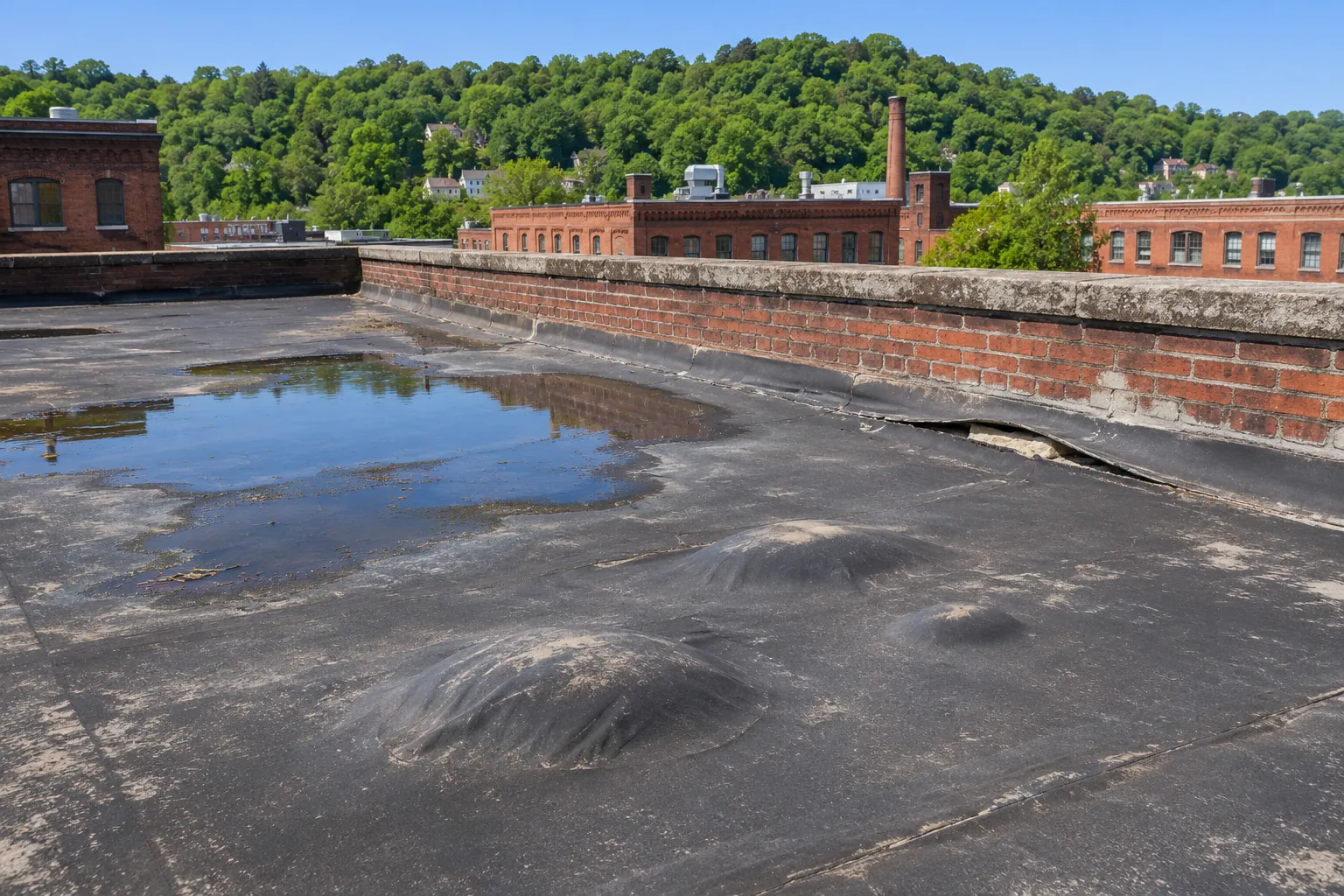
Flat Roof Repair
Membrane around silted drains is checked for strain at the clamping rings, then resealed where it pulled loose.
Flat roof repair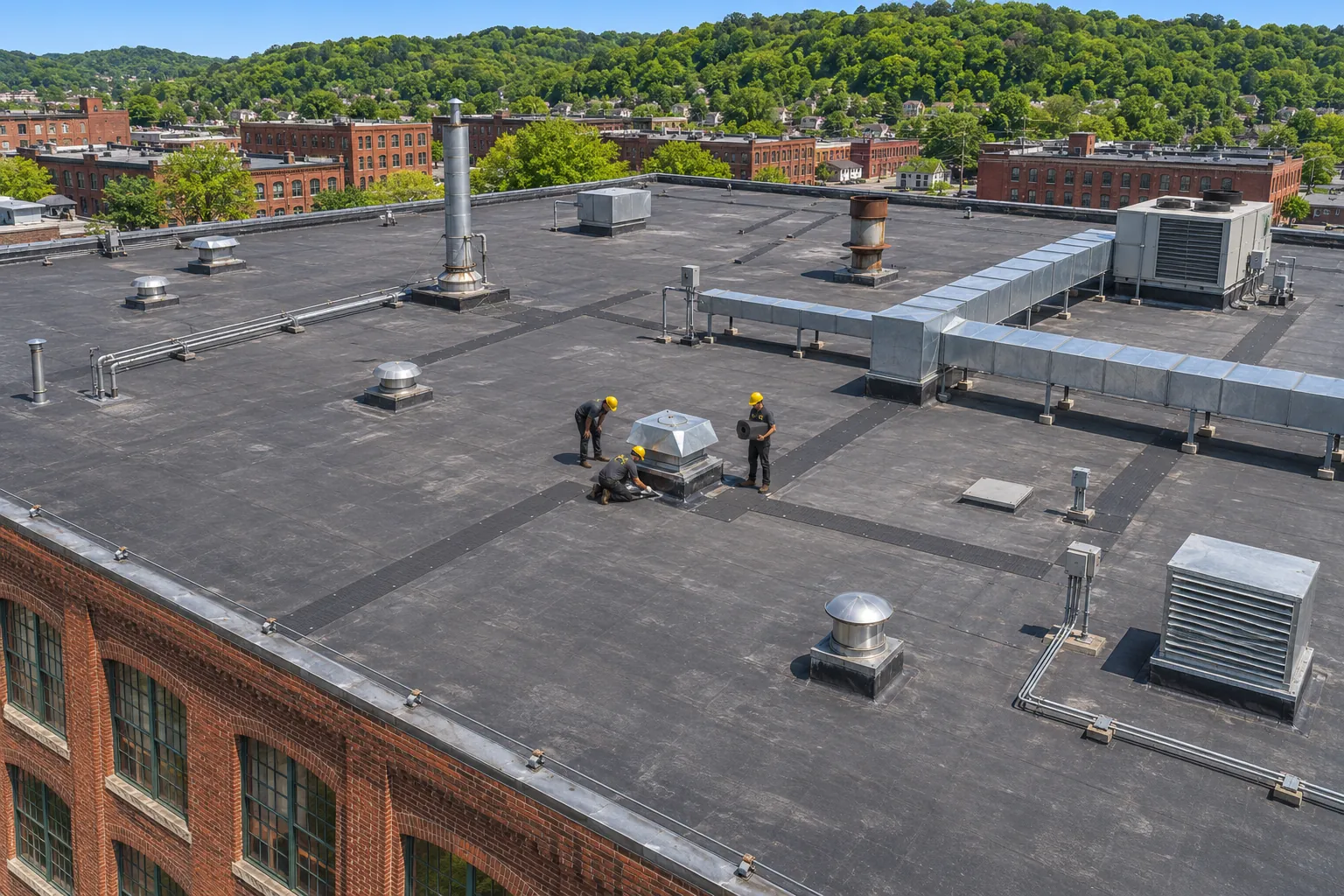
Dayton, KY
As a Dayton commercial roof repair contractor, we check and repair drains, scuppers, outlets, and wall flashing on low-lying business buildings after Ohio River high water.

After Ohio River flooding, a Dayton commercial roof repair contractor focuses on the outlets. The roof itself stays above the water, but silt in drains, scuppers, and downspout outlets backs water onto it in the next storm.
Wall flashing near grade and lower wall panels get checked too, since rust starts at the water line. For permits, the state’s county sheet sends Dayton owners to Campbell County’s building inspectors.
Flood damage on a roof shows up a storm or two later. These pairs show what to watch for.
Water sits on the roof for days after the first storm since the flood.
Mud carried into storm lines blocks the leader, so the drain stops taking water.
A damp line forms inside along the floor at an outside wall.
Steel at the old water line starts rusting and opens gaps at the wall base.
A low canopy or lean-to roof leaks where it meets the main wall.
Debris and standing water tore or loosened the flashing on roofs close to the ground.
Clearing outlets and fixing low flashing after high water keeps the next rain from becoming a roof leak.
Flow-tested drains and cleared scuppers move water off the roof before it ponds against seams.
Canopy and lean-to roofs near grade get their wall flashing checked and repaired.
Sealed base trim and wall flashing stop water from creeping in at the floor line.
Fixing outlets now avoids another round of wet ceilings after the first big storm.
Notes tie each repair to the flood, which helps with insurance and future planning.
A post-flood roof check becomes part of the routine whenever the river rises.
Every service here starts with how high water affected the building.
Membrane around silted drains is checked for strain at the clamping rings, then resealed where it pulled loose.
Flat roof repair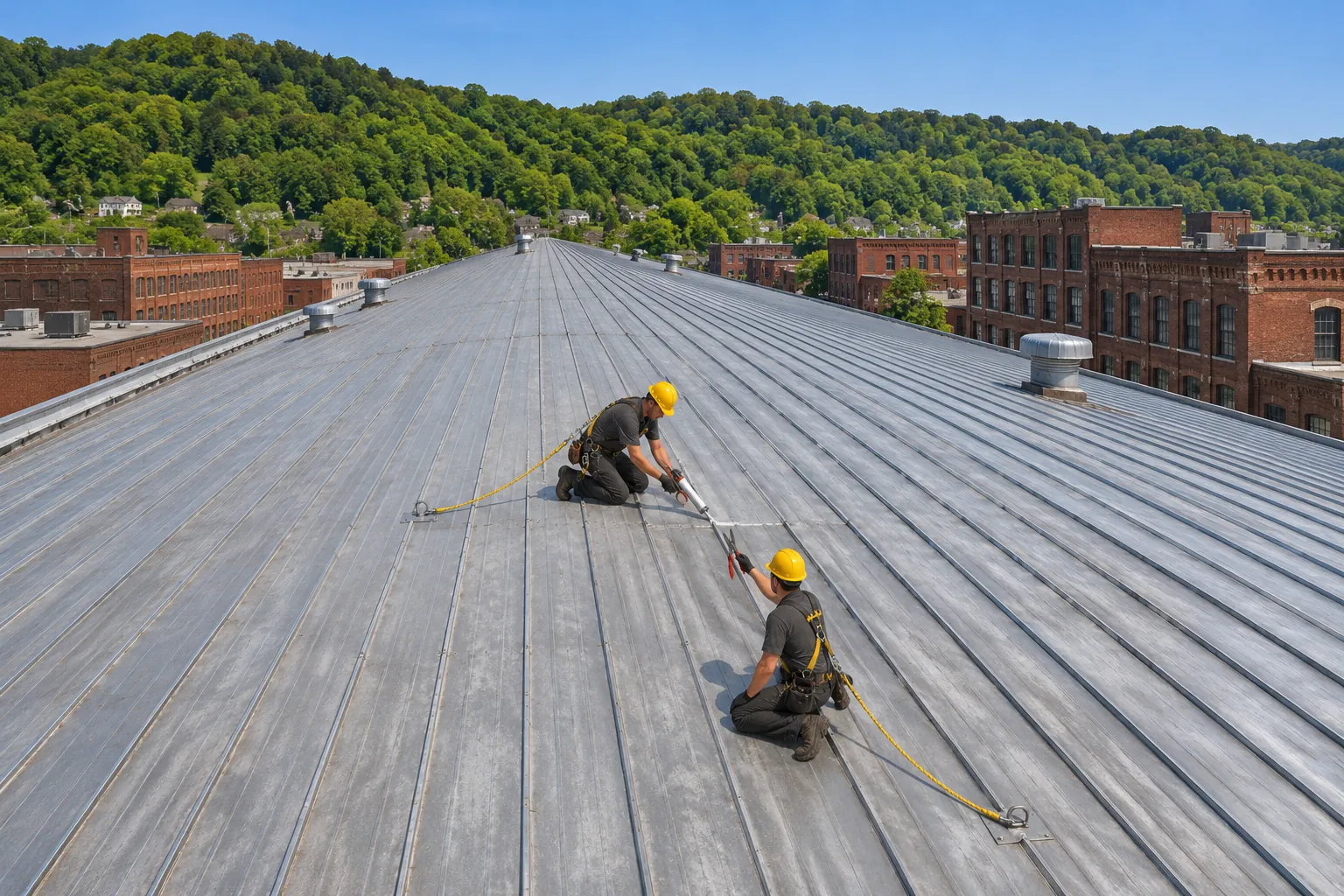
Lower wall panels and base trim with rust at the water line get primed, sealed, or replaced.
Metal roof repair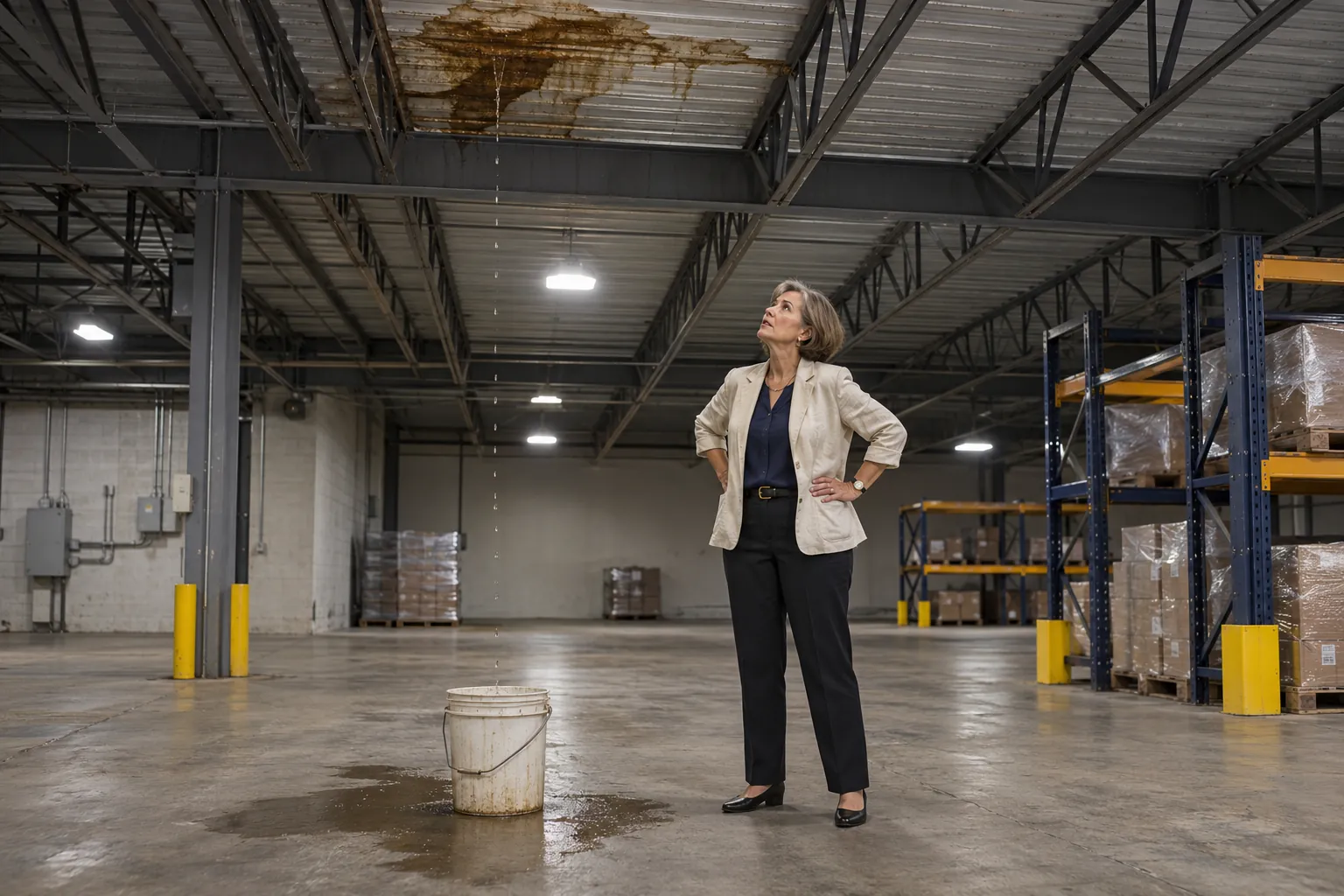
New leaks after a flood get traced to blocked outlets or damaged low flashing before anything is patched.
Leak repair
Larger buildings get every interior drain flow-tested and every storm line outlet cleared after the river drops.
Industrial roof repairSilt in a drain line is the usual cause. Call and tell us where the water sits and which drains serve it.
Four decisions take a building from high water back to drains that work.
Drains, scuppers, gutters, and low flashing are checked, along with any canopy or lean-to roofs near grade.
Each interior drain is flow-tested with a hose, and blocked leaders are cleared of silt.
Rusted base trim and lower panels are primed where the steel is firm and replaced where it gives way.
Every repaired drain is tested again, and the work is logged with dates tied to the flood.
Is your low-lying building in Dayton or a nearby town? We repair commercial roofs across the list here; anywhere outside it, call us or send us a message.
What low-lying building owners ask after the river goes down.
Most Asked
Roof drains, scuppers, and downspout outlets for silt, plus wall flashing near grade. The roof stays above the water, but blocked outlets back water onto it during the next storm. Look for mud in downspout boots, debris in interior storm lines, rust at the water line on lower panels, and damage to lean-to and canopy roofs close to the ground.
A hose is run into each roof drain while someone watches the outlet or a cleanout below. Slow or backed-up flow means silt in the leader or storm line, and that gets cleared before the next rain. The drain clamping ring is checked at the same visit for strain from standing water.
Silt mainly causes trouble by blocking drains, which leaves water standing on the membrane and strains seams near the drain. Where debris reached low roofs or canopies, it can also scrape or tear flashing. Both are checked and repaired once the water drops and the roof is safe to walk.
Standing water and the mud it leaves keep steel wet at the same line for days, which strips the protective finish. Rust then opens gaps at the base trim and lets water in at floor level. Firm steel is cleaned and primed; thinned sections are replaced.
As soon as the river drops and the building is safe to reach, and again after the first heavy rain. The second check confirms drains and outlets carry water away now that the lines are clear, and catches any leak the first visit could not test.
The state’s county sheet sends Dayton owners to Campbell County’s building inspectors. Clearing outlets and resealing flashing are routine; replacing drain bodies, deck, or larger roof sections are the scopes worth asking the county about first.
Tell us when the water came up and where the roof now ponds, and we will set up a free inspection and estimate.