
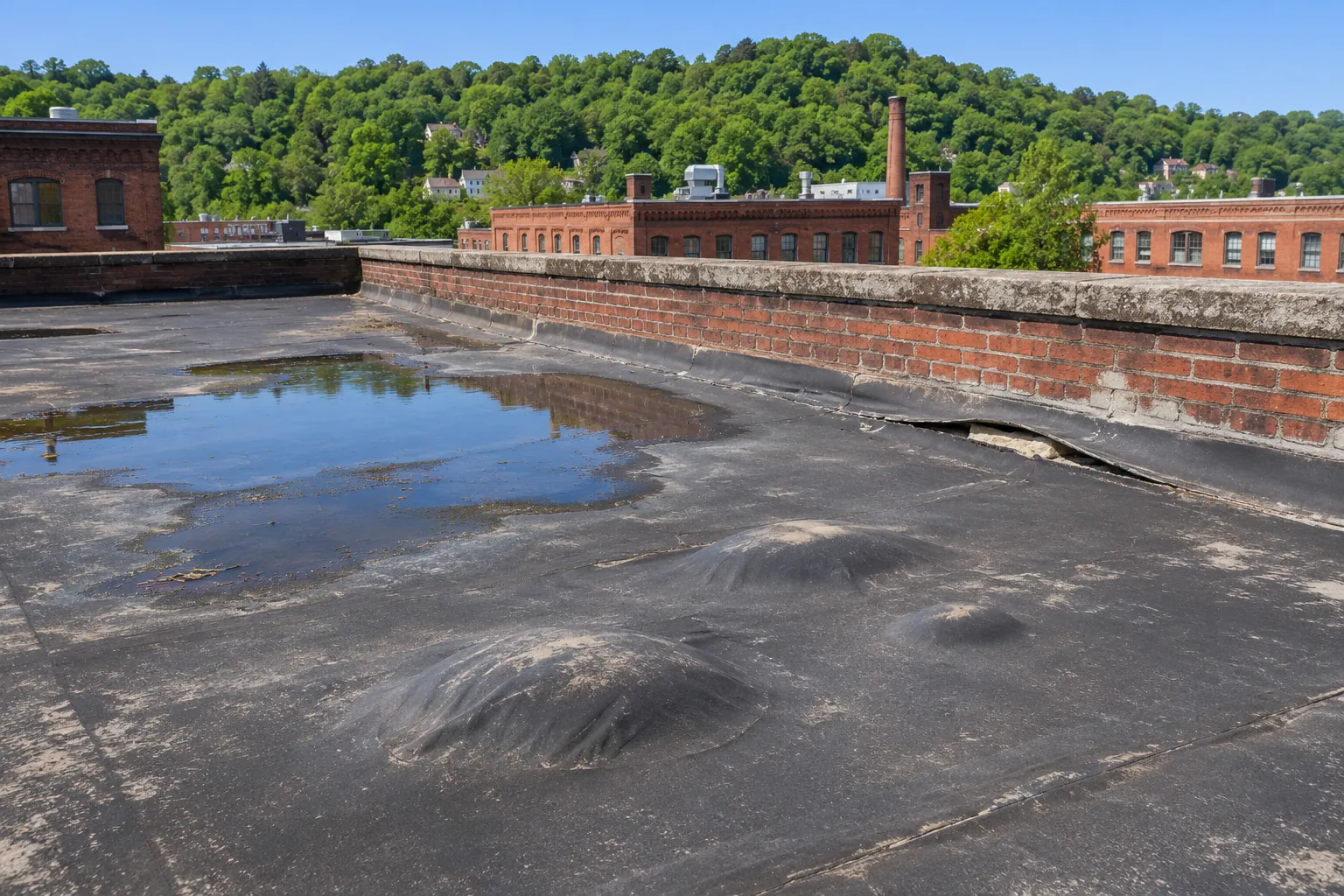
Fastener Replacement
Every screw is checked by hand or driver; stripped ones become oversized screws with new washers, set snug without crushing the washer.
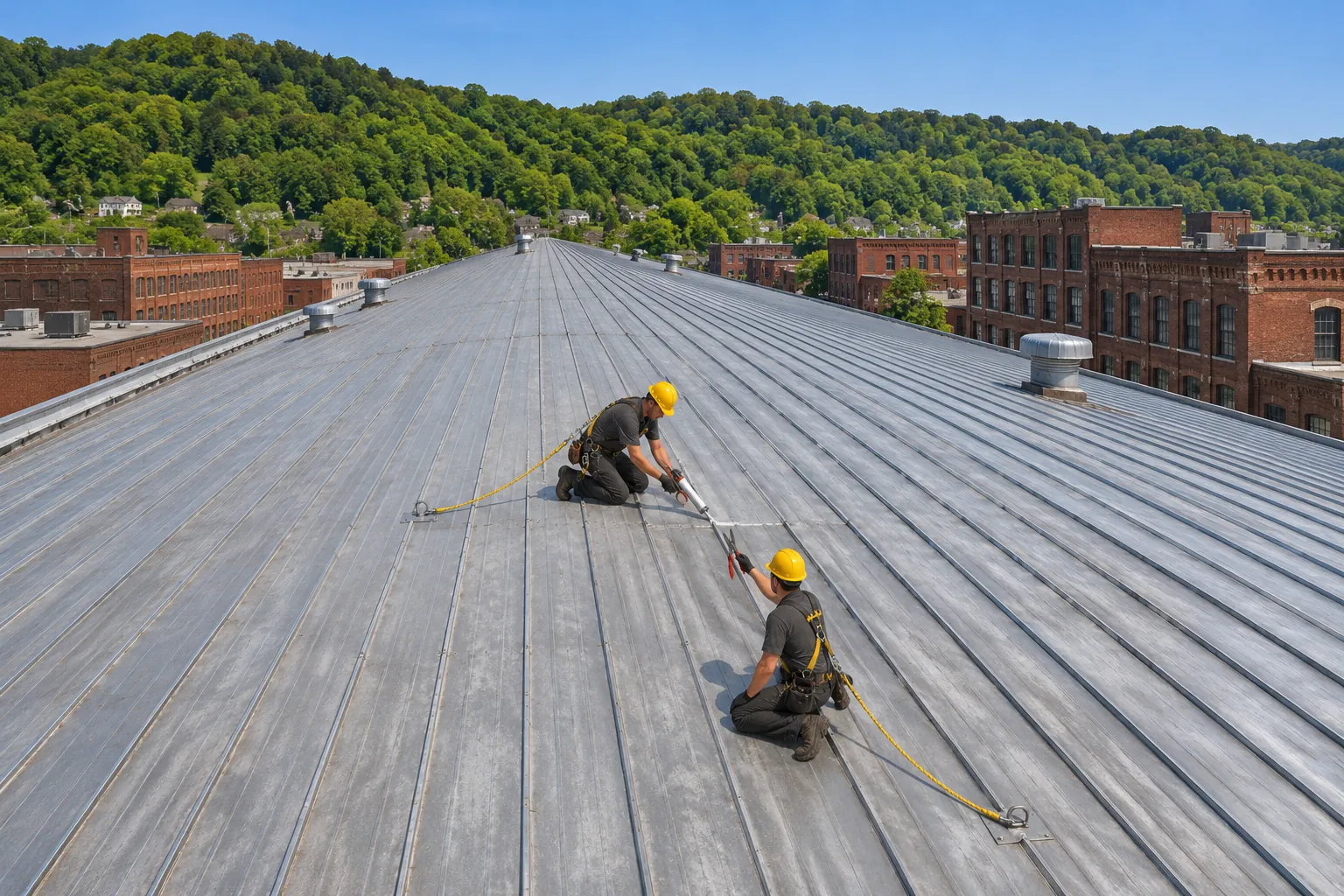
Commercial Metal Roof Repair
As a Covington commercial metal roof repair contractor, we replace backed-out screws, reseal leaking laps, fix rusted panels, and repair gutters and valleys on metal buildings.
A Covington commercial metal roof repair contractor starts by pushing on rusty steel and checking every screw. These rows show which findings stay repairs.
| What We Find | Repair Handles It | Panel Or Roof Replacement |
|---|---|---|
| Screws | Loose or stripped screws and split washers | Screws pulling through rusted-out panels |
| Rust | Surface rust on firm steel, pinholes at laps | Steel that gives way under a screwdriver along the panel |
| Laps | Failed sealant or butyl tape at end and side laps | Lap ends rusted through across many panels |
| Gutters and valleys | Split seams, sagging hangers, small rust holes | Valley metal rusted through under every panel end |
| Panels | A few dented ribs or one rusted panel | Thinned panels spread across much of the roof |
Metal roofs move every day as the sun heats and cools the panels. These pairs show where that movement turns into water inside.
Several drips land in a straight line, because water runs along a purlin before it falls.
A screw driven beside the purlin holds nothing, leaves a path for water, and loosens with each heat cycle.
Water shows up during a thaw and is gone by spring, often near an outside wall.
Ice at the eave backs meltwater uphill into end laps on long, low-slope panel runs.
A damp streak runs down the inside face of a wall just below the gutter line.
A clogged outlet or split seam sends water over the gutter and back behind the eave trim.
Each repair works on fasteners, laps, rust, or drainage, the four places metal roofs let water in.
Every screw is checked by hand or driver; stripped ones become oversized screws with new washers, set snug without crushing the washer.
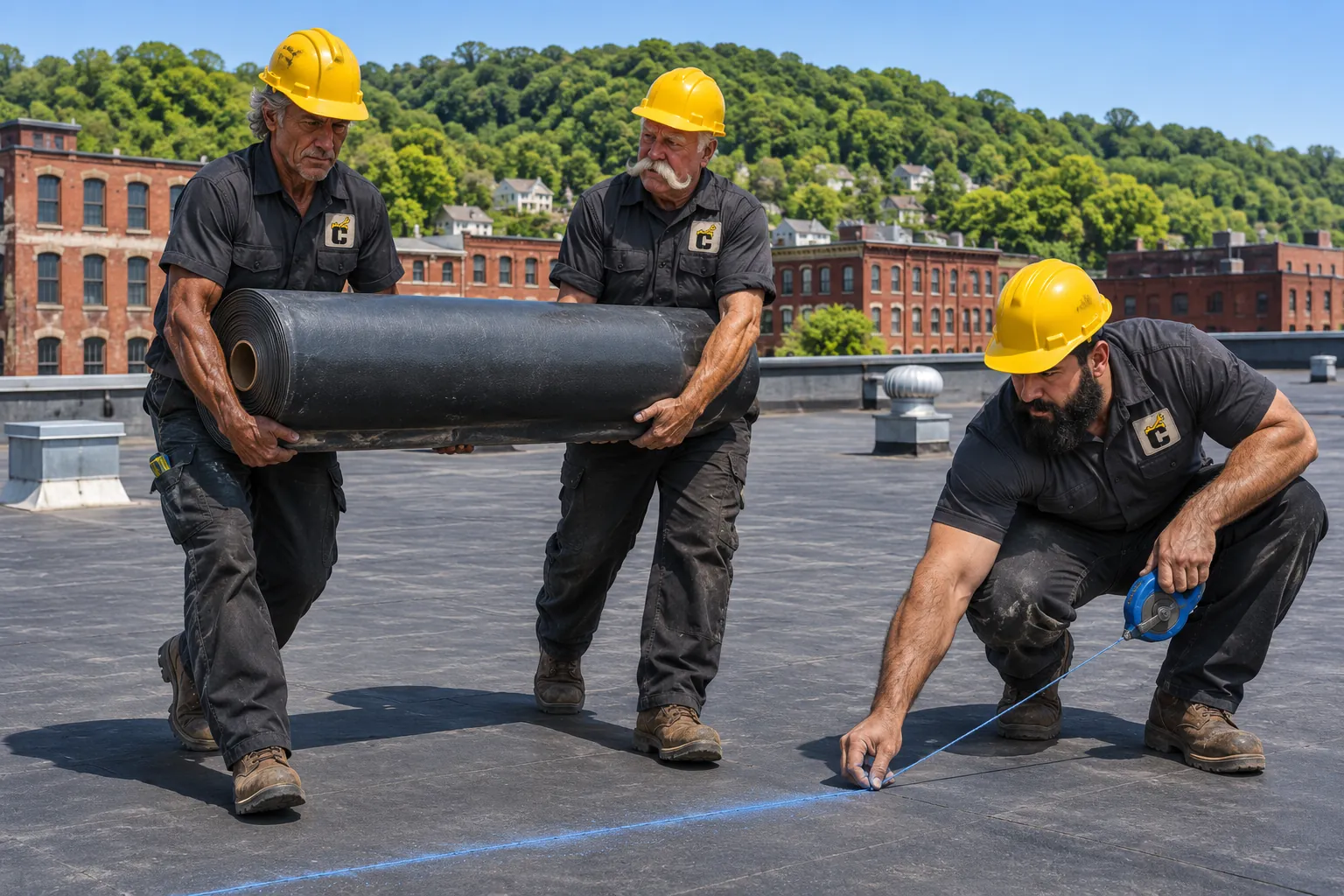
Where a lap opens, old sealant comes out, new butyl tape goes in, and stitch screws pull the joint tight at the right spacing.
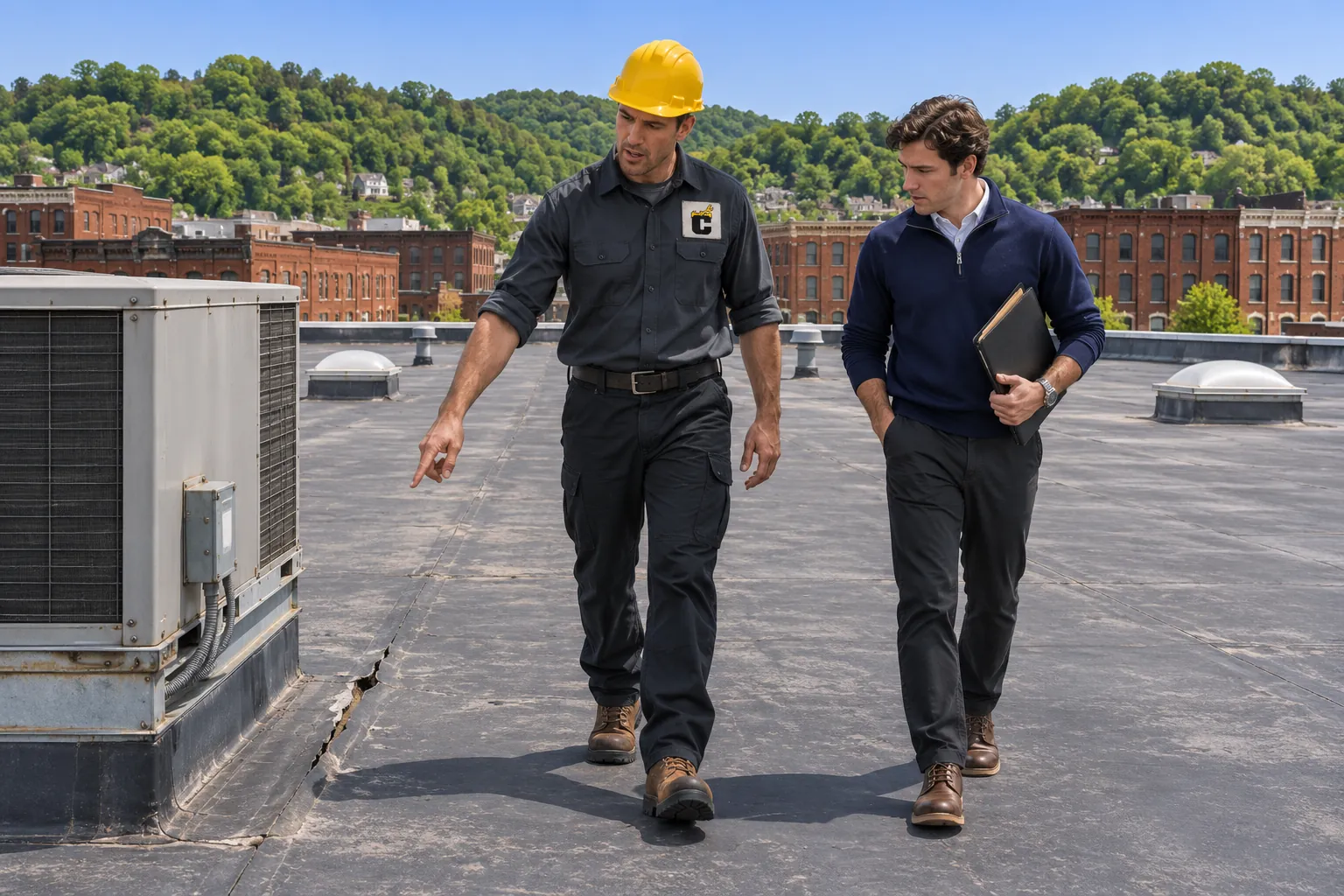
Firm rusty steel is wire brushed, primed, and sealed; pinholes get a reinforced patch, and thinned panels are replaced.
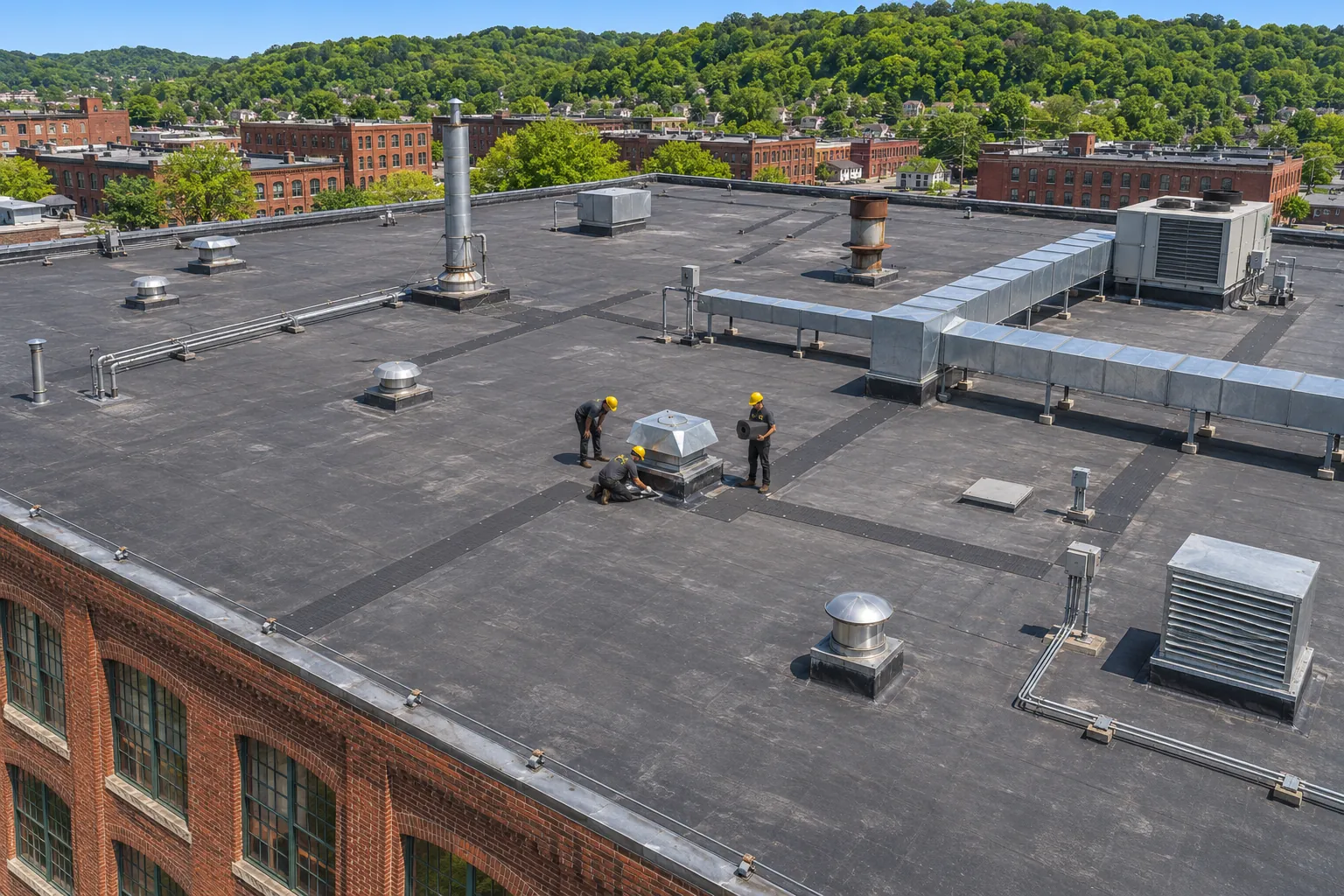
Split gutter seams are riveted and sealed, sagging runs rehung at closer spacing, and rusted valley metal replaced under the panel ends.
Metal roofs reward early repair, because a loose screw or open lap left alone feeds rust in the steel around it.
Sealing laps and swapping failed screws keeps water off the steel, so rust at the opening stays small.
Tightened screws and stitched laps hold panels against wind lift along the eave and ridge rows.
Fixing the purlin-line drips protects tools, stock, and equipment in shops and warehouses under the panels.
Once true leaks are closed, any drips left on cold mornings point to condensation, which needs a different fix.
Work follows the screws, laps, and panels involved, so a building with one bad run pays for one run.
Logged rust checks show how fast steel is thinning, which sets a realistic window for panel or roof replacement.
That pattern points to the screws or laps above a purlin. Call and describe where the drips land and how far they sit from the walls.
Five decisions move a metal roof from a leak report to sealed laps and documented repairs.
Screws, washers, end laps, ridge caps, gutters, and panel ends are checked along each run, and rusty spots are pushed with a screwdriver.
Firm steel takes oversized screws and new sealant; steel that gives way calls for a metal patch or a new panel.
Laps that can be opened get fresh butyl tape; closed laps get a surface seam treatment plus stitch screws at proper spacing.
Hangers, gutter seams, and valley metal are fixed after the field so water from the panels reaches the outlets.
Each repaired screw row, lap, and panel is noted by location, with photos, so the next inspection starts where this one ended.
Metal buildings often carry membrane additions, plant equipment, or leaks that wander, and these services cover them.
A membrane office addition on a metal plant needs its own repair and a flashed joint where the two roofs meet.
When water follows a purlin far from its source, leak tracing narrows the search before any panel is opened.
Large metal warehouses and plants get repairs scheduled around shifts, intakes, and production lines below.
Owners of shops, plants, and warehouses ask these most.
Most Asked
Each loose screw comes out and a larger-diameter screw with a new sealing washer goes in, since the old hole has usually worn oversized. Screws are set snug without crushing the washer, and heads in the eave and ridge rows get sealed. A screw that missed the purlin is pulled and its hole patched.
Yes, while the rust sits on the surface or forms small holes. Surface rust on firm steel is wire brushed, primed, and sealed; pinholes at laps or eaves get a reinforced patch; a hole bigger than a hand gets a screwed and sealed metal patch or a new panel. Steel thinned along its length means the panel gets replaced.
The joint is cleaned, failed sealant or butyl tape is replaced, and stitch screws pull the lap tight at the correct spacing. Laps that stay closed take a surface seam treatment instead, and lap ends rusted through mean new panels. End laps on long, low-slope runs leak most, since water backs up the overlap, especially once eave ice forms.
Split seams are cleaned, riveted, and sealed, rusted gutter bottoms are replaced in sections, sagging runs get new hangers at closer spacing, and rusted valleys get new valley metal under the panel ends. An undersized downspout gets a larger outlet. Galvanized gutters with white rust are scrubbed and primed with a zinc-rated primer during the repair.
Metal repairs center on screws, laps, and rust, while membrane repairs center on seams, punctures, and flashing, so the tools and materials barely overlap. Water on metal runs along purlins before dripping instead of spreading under a sheet. A metal plant with a membrane office addition gets each roof repaired its own way, with a flashed joint where they meet.
Describe the building, the panel type, and where water lands inside, and we will set up a free metal roof inspection and estimate.